
Play Word Wipe
You find a word, drag across the letters and watch them disappear. Then the tiles above drop into place, and suddenly there's another word you hadn't noticed before. That's what makes Word Wipe so easy to get caught up in. Connect letters, clear complete rows and see how far you can get before the timer runs out. The rules are simple, but deciding which words to remove can make all the difference.
How to Play Word Wipe
Find words, remove letters and clear the required rows before time runs out.
Look across the grid for neighboring letters that form a valid English word.
Drag through the letters in order to select your word and remove it from the board.
Keep removing words until entire rows disappear and you reach the level's target.
Clear enough rows before the countdown ends to advance to the next level.
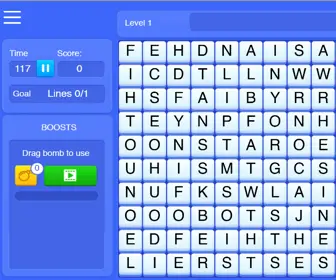
Word Wipe: Find Words, Clear Rows and Keep Moving
At first glance, the board looks like a jumble of letters. You can probably spot a few short words immediately, but finding the right ones is a different matter. In Word Wipe, every word you remove changes the grid, and every move brings you a little closer to clearing another row.
The game starts simply enough. You connect neighboring letters to form a valid word, the selected tiles disappear, and the letters above fall into the empty spaces. But there's an important detail: finding words isn't the only goal. You need to clear entire rows to advance, and the clock is always running.
That changes the way you approach the puzzle. A long word might look impressive, but a shorter one near the bottom of the board could be more useful if it helps finish a row. Sometimes the smartest move isn't the word with the most letters. It's the one that leaves the board in a better position.
How to Play Word Wipe Online
If you've never played Word Wipe before, don't worry about developing a complicated strategy straight away. Start by getting comfortable with how the letters connect and what happens when you remove them.
- Scan the Letter Grid – Look for familiar combinations of letters. Three- and four-letter words are often the easiest to recognize at the beginning.
- Connect Neighboring Letters – Use your mouse to drag through adjacent tiles and create a valid English word.
- Release to Clear the Word – Once you've selected a valid word, the letters disappear and you receive points.
- Watch the Board Change – The remaining tiles fall into the empty spaces, creating new letter combinations.
- Work Toward Complete Rows – Continue removing words until you've cleared the number of rows required for the level.
- Keep an Eye on the Timer – Complete the row-clearing objective before time runs out to move on.
After a few rounds, you'll start noticing that certain moves are more useful than others. Clearing letters near the bottom can change several columns, while removing a word near the top may have a smaller effect on the rest of the board.
Why Clearing Rows Matters More Than Finding Every Word
One of the first mistakes players make is treating Word Wipe like a traditional word search. They look for as many words as possible without paying much attention to where those words are located.
But Word Wipe has a specific objective: remove complete rows. You can find plenty of valid words and still struggle to finish a level if your moves leave isolated letters scattered across the board.
Imagine you've cleared most of a row, but two letters remain near the edge. Finding a short word that includes those letters might be more valuable than removing a longer word from an area that's already fairly open.
It's worth checking the bottom of the grid regularly. Those lower rows often deserve extra attention because removing letters there can affect the arrangement above them.
The Trickiest Part: Choosing Which Word to Clear
Finding a word is satisfying, especially when it's a long one you didn't notice at first. But Word Wipe introduces an interesting decision: should you clear that word immediately, or look for another option?
Sometimes the answer is obvious. If a word removes several letters from a nearly completed row, it's probably a useful move. Other times, you have to think about what will happen after the tiles fall.
For example, you might spot a five-letter word across the middle of the board and a shorter word closer to the bottom. The longer word could give you more points, but the shorter one might shift several columns and bring new letters together.
There's no perfect way to predict every result. The fun comes from experimenting, watching the grid change and gradually developing a sense of which moves are worth making.
7 Word Wipe Strategies That Can Help
As you become more familiar with the game, you'll start recognizing patterns that make it easier to clear rows and manage the time limit. These are a few practical habits worth trying:
- Pay Attention to the Bottom Rows – Removing letters near the bottom can create larger changes in the grid and help you work toward the row-clearing objective.
- Look for Longer Words, but Stay Flexible – Long words can earn more points, yet shorter words may be better when they remove awkward letters from an almost completed row.
- Use Diagonal Connections – Don't limit your search to straight horizontal or vertical lines. Useful words may follow paths that change direction.
- Watch for Common Endings – Patterns such as -ED, -ER, -ING and -S can help you recognize words more quickly.
- Check What Will Fall After a Move – Look at the letters above your selection and consider whether removing the word might create useful new combinations.
- Avoid Getting Stuck on One Area – If you can't find a useful word in one section, move your attention elsewhere and return later.
- Remember the Timer – A good word is only useful if you have enough time to clear the required rows. Don't spend too long searching for the perfect combination.
The more you play, the more naturally these decisions come. Eventually, you may find yourself looking at the position of a word before even thinking about how many points it's worth.
What Happens When the Letters Fall?
Every time you clear a word, the selected tiles disappear and the letters above move down to fill the empty spaces. This means the board can change dramatically after a single move, especially when you've removed letters from several columns.
Sometimes that change works in your favor. Two letters that were separated before may suddenly become neighbors, making a useful word possible. Other times, the new arrangement leaves you with awkward combinations that are harder to clear.
It's tempting to keep searching for the same word patterns after every move, but that can cause you to miss new opportunities. Take a quick look at the whole board whenever the tiles settle. The next useful word may be somewhere completely different.
How to Get a Higher Score in Word Wipe
If you're aiming for a better score, you'll need to balance word length, board position and the time available. Longer words can be rewarding, but completing the level's objective is what allows you to keep playing.
A useful approach is to begin by clearing obvious words that improve the board, then look for longer combinations as new letters fall into place. If you're close to completing a row, concentrate on removing the remaining tiles rather than chasing points in another part of the grid.
Try to avoid spending too much time on a word you can't quite complete. A shorter, reliable selection can be more productive than repeatedly attempting a long combination that doesn't work.
Over time, you'll become better at recognizing which moves give you points and which ones help you advance. The strongest rounds usually involve a bit of both.
Word Wipe vs. Scrabble Blast: What's Different?
If you've played Scrabble Blast, Word Wipe will feel familiar in several ways. Both games ask you to connect neighboring letters, create valid words and watch the board change when tiles disappear.
The difference is in what you're trying to accomplish. Scrabble Blast offers several modes with their own objectives, including scoring challenges and action-based gameplay. Word Wipe places a clear emphasis on removing complete rows before time runs out.
- Word Wipe – Connect letters, remove words and clear the required rows to advance through timed levels.
- Scrabble Blast – Build words from adjacent tiles and explore different game modes with distinct challenges.
- Scrabble Sprint – Search for connected words on a letter grid and collect points by clearing them.
- Traditional Scrabble – Place letter tiles on a board and compete for points through strategic word placement.
If you enjoy games where every successful word changes the board, both Word Wipe and Scrabble Blast are worth exploring. They share a familiar idea but reward slightly different approaches.
Why Word Wipe Is Hard to Put Down
There's a particular rhythm to Word Wipe that makes it easy to play another round. You find a word, clear it, watch the letters fall and immediately start looking for the next one. The board never stays still for long, so there's always something new to examine.
And then there's the timer. When you've almost cleared the required rows and only a few seconds remain, even a simple three-letter word can feel like a major discovery. That little burst of urgency is part of what makes the game exciting.
It's also satisfying to see yourself improve. After a few sessions, you may start recognizing words more quickly, noticing diagonal connections you previously missed or making better decisions about which rows to target.
Word Wipe doesn't need complicated rules to be engaging. A grid of letters, a clear objective and a clock ticking in the background are enough to create a surprisingly absorbing word puzzle.
More Word Games Worth Exploring
If you enjoy connecting letters, try Scrabble Blast or Scrabble Sprint for two more variations on grid-based word puzzles.
For a different challenge, Text Twist 2 and Scramble Words focus on finding words from scrambled letters. You can also explore Crossword Puzzles if you prefer solving clues rather than searching a grid.
Switching between these games is a good way to enjoy different kinds of word challenges, each with its own pace and objectives.
Ready to Clear Another Row?
Maybe your next game will begin with a few easy words that clear space quickly. Or perhaps you'll spend the first minute searching for a useful combination near the bottom of the board. Either way, the interesting part is seeing how the puzzle changes after every move.
Return to the game above, connect a few letters and watch what happens when they disappear. Keep an eye on the timer, focus on the rows you need to clear and don't overlook the smaller words that can make a big difference.
Play Word Wipe online for free and see how many rows you can remove before the clock runs out. There's always another word waiting somewhere in the grid.
Frequently Asked Questions About Word Wipe
Is Word Wipe free to play?
Yes. You can play Word Wipe for free directly in your web browser without downloading the game.
How do you play Word Wipe?
Connect adjacent letters to create valid words. The selected letters disappear, new tiles fall into place and you work toward clearing complete rows before time runs out.
How do you advance to the next level in Word Wipe?
Clear the required number of rows before the timer expires to complete the level and move on to the next challenge.
Are longer words better in Word Wipe?
Longer words can earn more points and remove more letters, but shorter words are also useful when they help you clear a row or create new combinations.